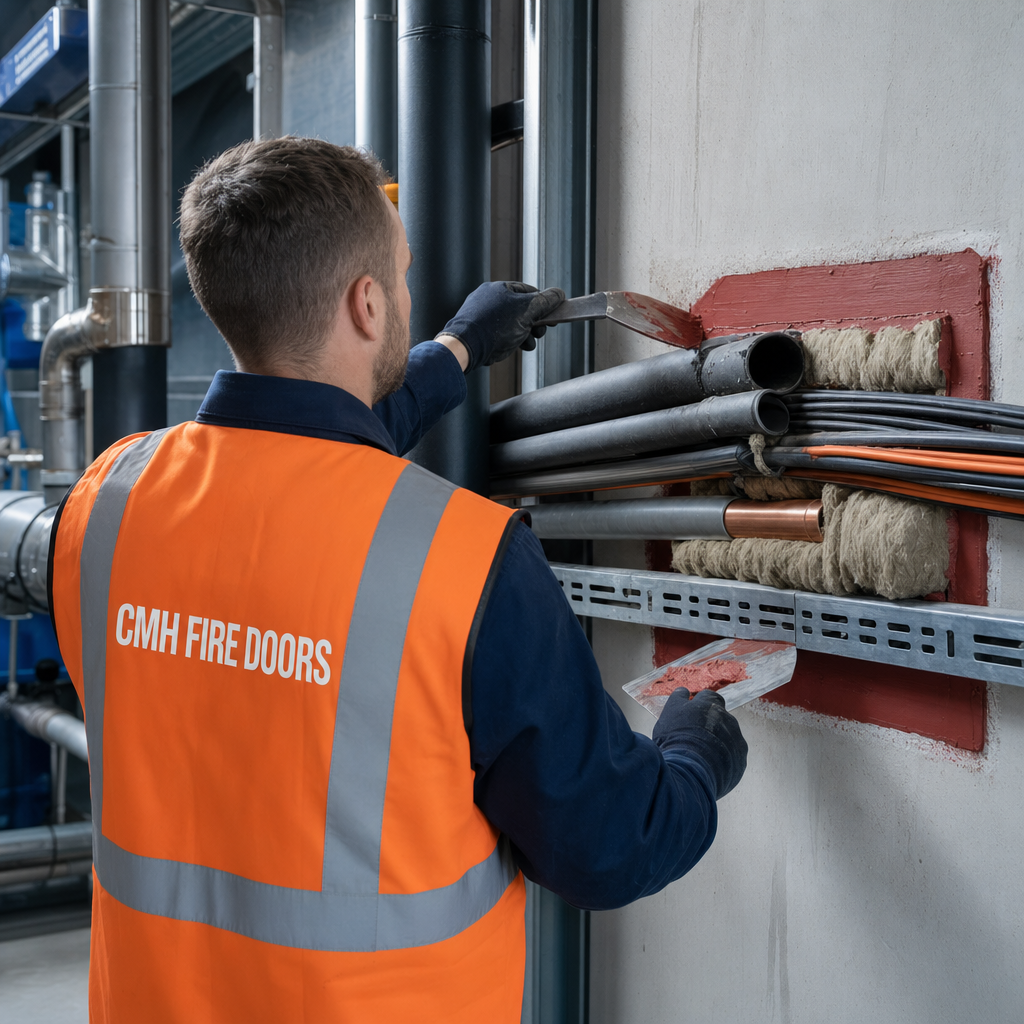
Service penetrations are the single most common point of fire-stopping failure. We seal cables, pipes, ductwork, and structural openings to maintain the fire integrity of every wall, floor, and ceiling.
If something passes through a fire-rated wall or floor, it has to be sealed with a tested system — and the evidence has to be on file.
Single cables, bundled trays, and containment routes sealed with certified intumescent compound or batt & coat systems.
Plastic, copper, and steel pipework sealed with intumescent collars, wraps, or compound — system selected to match pipe material and fire rating.
Fire dampers fitted and tested, and surrounding ductwork sealed back to the host wall with the correct fire-rated system.
Larger openings around beams, rebates, and wall-to-floor junctions filled with rock-wool batt and intumescent sealant to BS 476 / EN 1366.
Fire spreads through the path of least resistance — and that's almost always an unsealed penetration in an otherwise correct compartment wall. Insurance assessors and fire officers know this; they look in the ceiling void, behind risers, above suspended ceilings.
Every penetration we seal is photographed and logged with the product used and the system it conforms to. You get a register that proves the work was done correctly — not just that something was applied.
Book a surveyWe identify every penetration that's at risk — and quote a fix on a per-penetration basis.